
A playwriting structure
Dedicated blocks for acts, scene headings, character cues, dialogue, stage directions, lyrics, and notes. Every part of the script keeps its own formatting and behaviour.
Your play is not a screenplay with the camera removed. Stagistic Editor is a free, browser-based script editor built for acts, scenes, dialogue, lyrics, and music cues. Not shots and cuts.
Stagistic Editor is built for larger screens. Open it on a laptop or desktop at least 1000 pixels wide — mobile support is on the way.
Industry standard tools like Final Draft are built for film. They assume your story is driven by INT/EXT camera setups, shots, and cuts. When you try to write a play in them, you spend more time fighting the formatting than writing.
Stagistic Editor is different. It understands the craft of theatre: acts, scenes, musical cues, and complex character interactions. It doesn't force a screenplay structure onto your stage play.
Dedicated blocks for acts, scene headings, character cues, dialogue, stage directions, lyrics, and notes. Every part of the script keeps its own formatting and behaviour.
A live outline keeps the structure visible as you write. Jump directly to any scene, reorder scenes, and group them into acts instead of forcing your play into a screenplay-shaped structure.
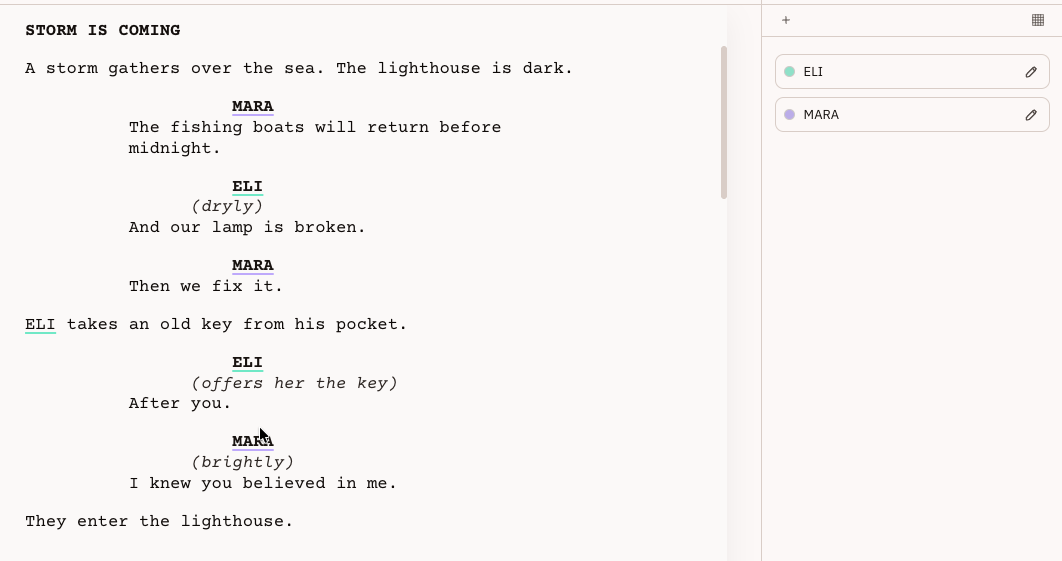
Build a character catalogue directly from your script. Assign colours, highlight appearances, group characters, rename characters, tag them inside stage directions, and write dialogue for two or more characters speaking together.
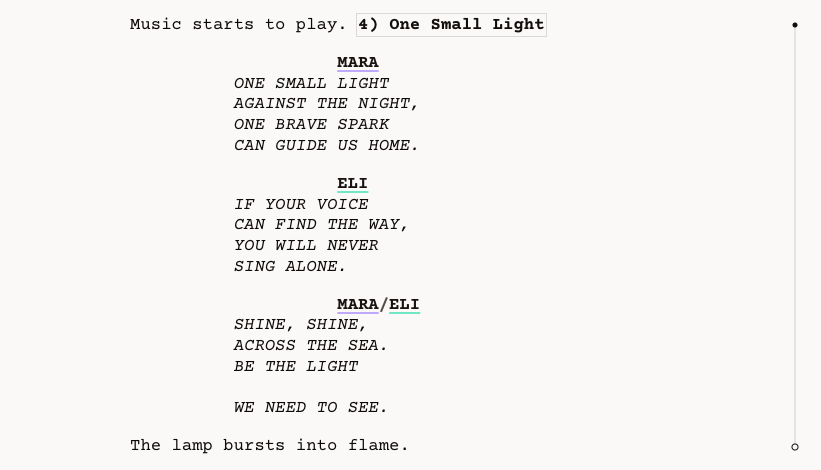
Write lyrics as their own block type, manage songs and instrumentals, place music cues directly in the script, and attach score PDFs to individual musical numbers.
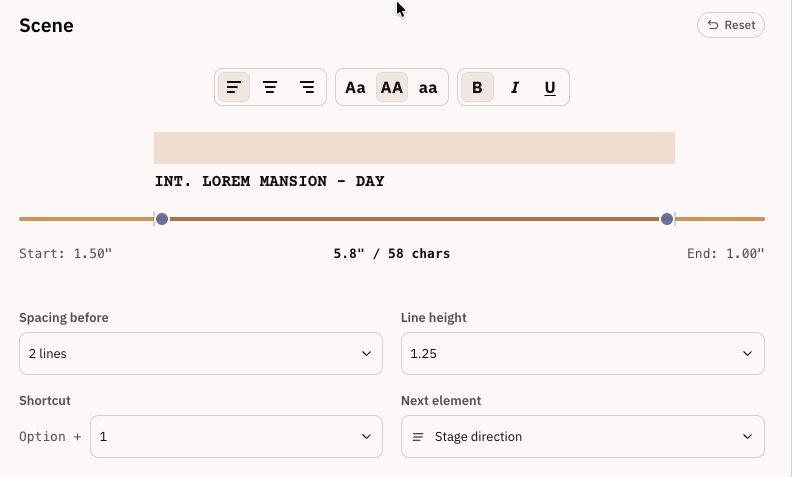
Configure page format, title page, headers and footers, and each block's indentation, alignment, emphasis, and casing. Set keyboard shortcuts and decide which block follows next, so the editor matches the way you write.
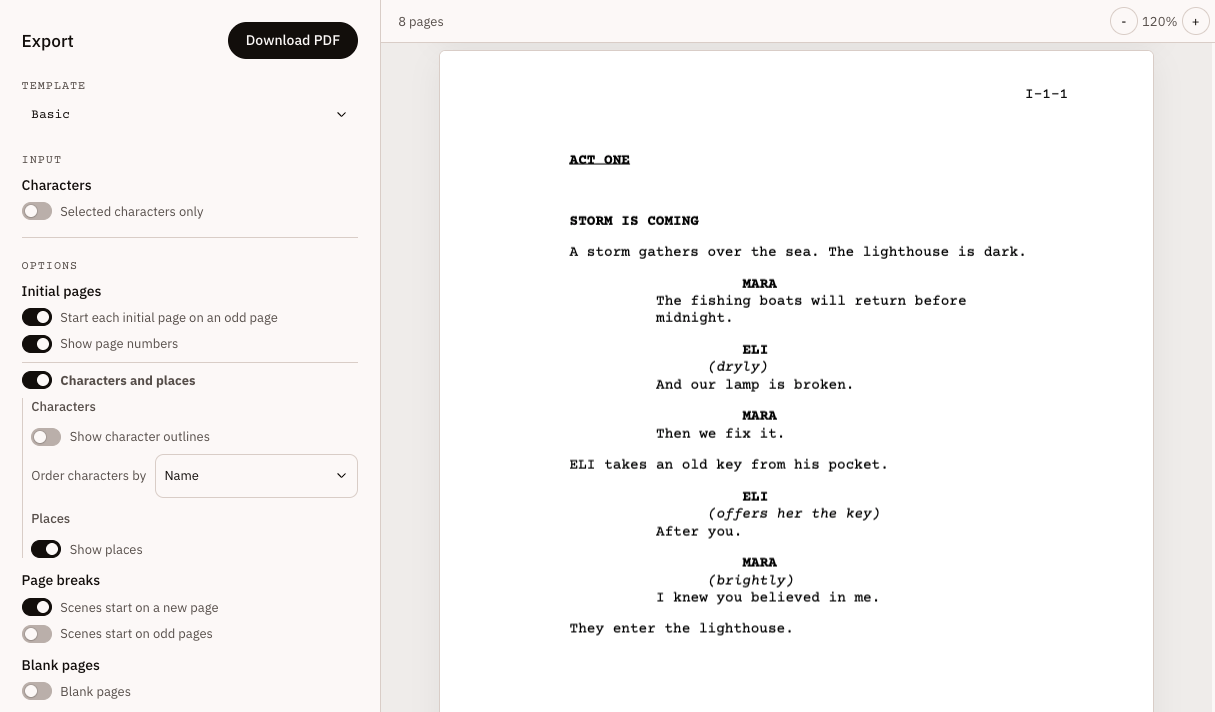
Export your script and sheet music into a single, print-ready PDF. Stagistic Editor automatically handles page numbering across your text and inserted music scores, so actors and musicians always stay on the same page.
Yes. Stagistic Editor is free now and will remain free in the future. There is no subscription, trial, or paywall for writing, structuring, or exporting your scripts.
No. You can open the editor and start writing without signing up. Your scripts are stored locally in your browser by default. You can also download a backup of your work and import it again whenever you need it.
Locally in your browser. You can download a .stagistic backup and import it again whenever you need it. Cloud sync is not ready yet; but when it is, it will be free.
Absolutely! There are no restrictions on how you use scripts you write in Stagistic Editor. The editor is free for everyone.
Industry standard tools like Final Draft use a screenplay structure (INT/EXT) which Stagistic Editor deliberately avoids in favour of theatre acts and scenes. It is designed from the ground up specifically for stage plays and musicals.
Instead of formatting text with spaces and tabs, Stagistic Editor uses dedicated blocks for elements like stage directions, dialogue, and lyrics. This means your play stays perfectly structured, character names remain linked to a central cast list, and stage directions format automatically.
Writing a libretto is natively supported. Stagistic Editor has dedicated blocks for lyrics, handles songs and instrumentals via a catalogue, and allows you to attach PDF scores directly to musical numbers. The export engine then seamlessly combines your script and scores into one paginated document.
Yes, the editor is available on GitHub under the MIT licence. Any contributions are welcome!

I'm Milan Zítka, a software developer with more than 15 years of experience and an author of several musicals. I originally built Stagistic Editor for my own writing. Now I'm offering it free to the whole theatre community, because I believe the ability to write for the stage shouldn't depend on paying for basic software.
Stagistic Editor is free to use in your browser, with no account or paywall. Every current and future Editor feature will remain free.
Stagistic Editor is built for larger screens. Open it on a laptop or desktop at least 1000 pixels wide — mobile support is on the way.